Swing bridges, lift bridges, boat lifts and lock gates. We survey them, assess them, repair them and design their upgrades, working with the structure in service wherever possible.
A moving bridge has two jobs: it carries traffic when it is closed, and it opens on demand for the boats beneath it. Its structure, its mechanism and its controls all have to work together, and every hour it is out of action affects road users, boaters and the asset owner.
Matrix Consulting Engineers works on these structures from first survey through to as-built records. We capture the existing structure accurately with drone survey and laser scanning, model it in 3D, and use that model to assess the structure, design repairs and plan upgrades, coordinating closely with the mechanical, electrical and hydraulic specialists.
Our moving structures work covers swing bridges, lifting bridges, a boat lift and flood gates on the canal and river network, alongside new-build swing bridge design.
A moving bridge carries traffic when it is closed and clears the channel when it is open. The load paths change between the two, and so does the geometry, so we design for both.
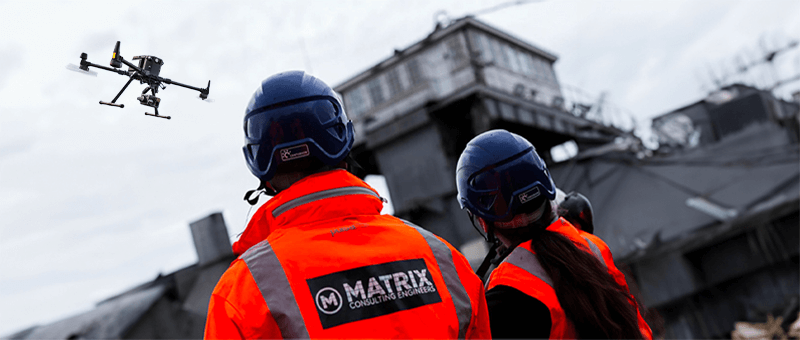
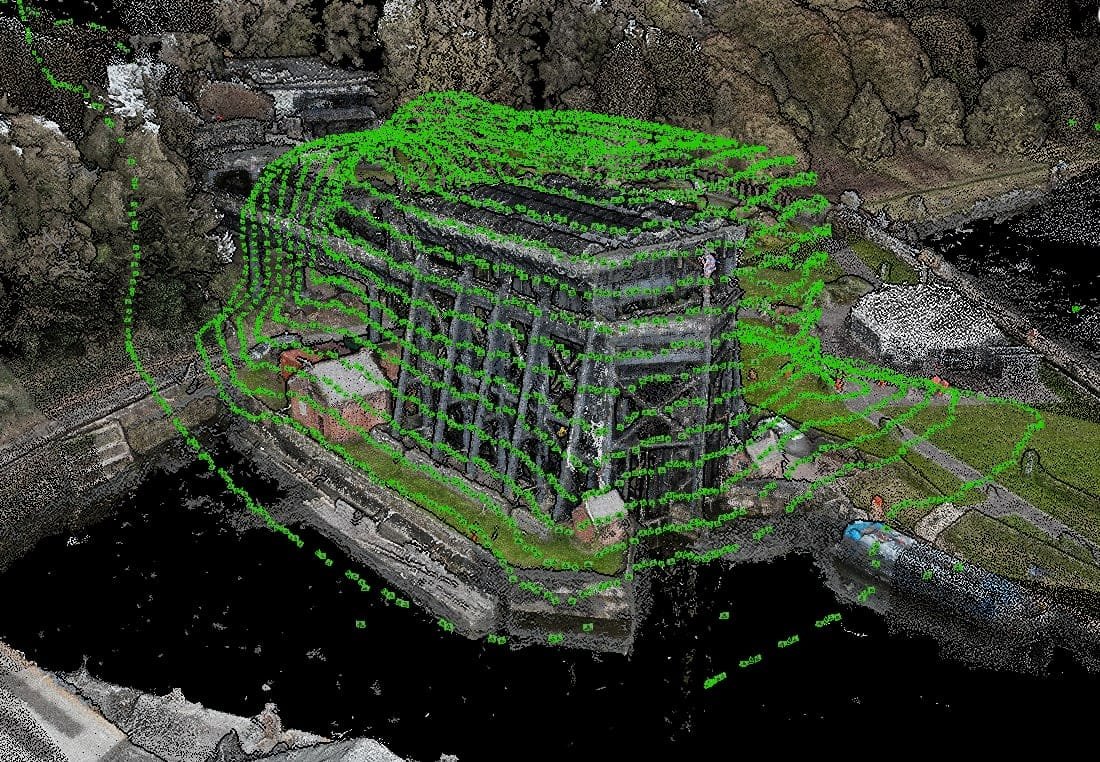
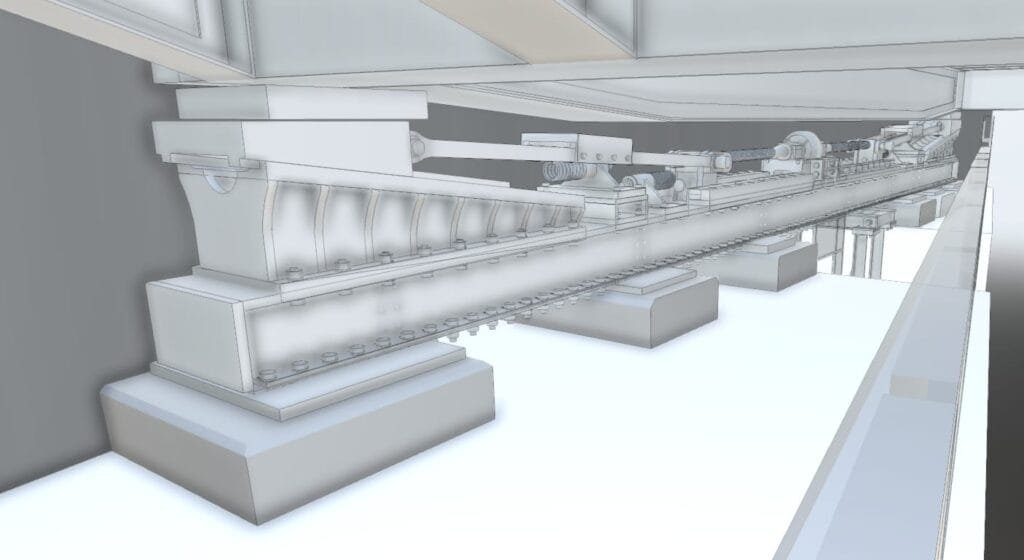
We start by capturing the structure by drone and laser scan, in the open and closed positions where the work needs it, so the design begins from measured geometry rather than old drawings. From that we build a single 3D model of the structure, the mechanism housing and the approaches, and every discipline designs against it.
We then analyse the structure in its operating states and design the minimum intervention it needs, using the reserve capacity the existing structure already has. Construction drawings, site support and as-built records for the asset owner complete the job.
Survey, structural, civil and temporary works design sit under one roof, coordinated with the mechanism specialists, so nothing is lost between the people who measure a structure and the people who design for it.
Assessment of decks, pivots and abutments in the open and closed positions, repair and strengthening design, and new swing bridge design with AIP.
Barrier plinths, wig-wag signal foundations, ducting, chambers, fencing and approaches, set out around the live structure.

Drone photogrammetry and laser scanning through our sister company, Matrix Advanced Surveying, with the structure captured open and closed.
Revit models of the structure, mechanism housing and approaches, used for design, M&E coordination and as-built records.

Structural changes for new drives, hatches, hydraulics and controls, coordinated with the mechanical, electrical and hydraulic designers.
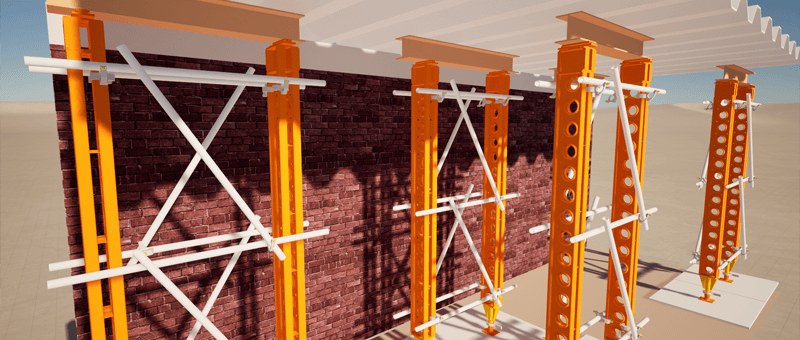
Temporary works to support decks, gates and counterweights while wedges, bearings or drive components are removed and replaced.
Choose Matrix Consulting Engineers for your moving structure and work with engineers who understand how it moves as well as how it stands. Our UAS drone surveying, BIM and temporary works design teams feed into every project, so you get one coordinated design package from first survey to as-built records.
In-house drone and survey capability through our sister company, Matrix Advanced Surveying, so survey and design sit in the same team.
The structure is captured and designed for how it moves as well as how it stands, so nothing is designed into its swing path.
Used to working next to live waterways and roads, with the access, possession and safety-critical staff constraints that come with them.
Clients have reused our survey-to-digital-twin method as the template for further bridges of the same type.
Matrix Consulting Engineers is dedicated to maintaining the highest standards in all our projects. Our moving structures services comply with all relevant national and international codes, and with the technical approval requirements of the asset owners we work for.
Our commitment to these standards means our designs are safe, buildable and fully compliant, giving asset owners and contractors peace of mind and a solid foundation for the works.

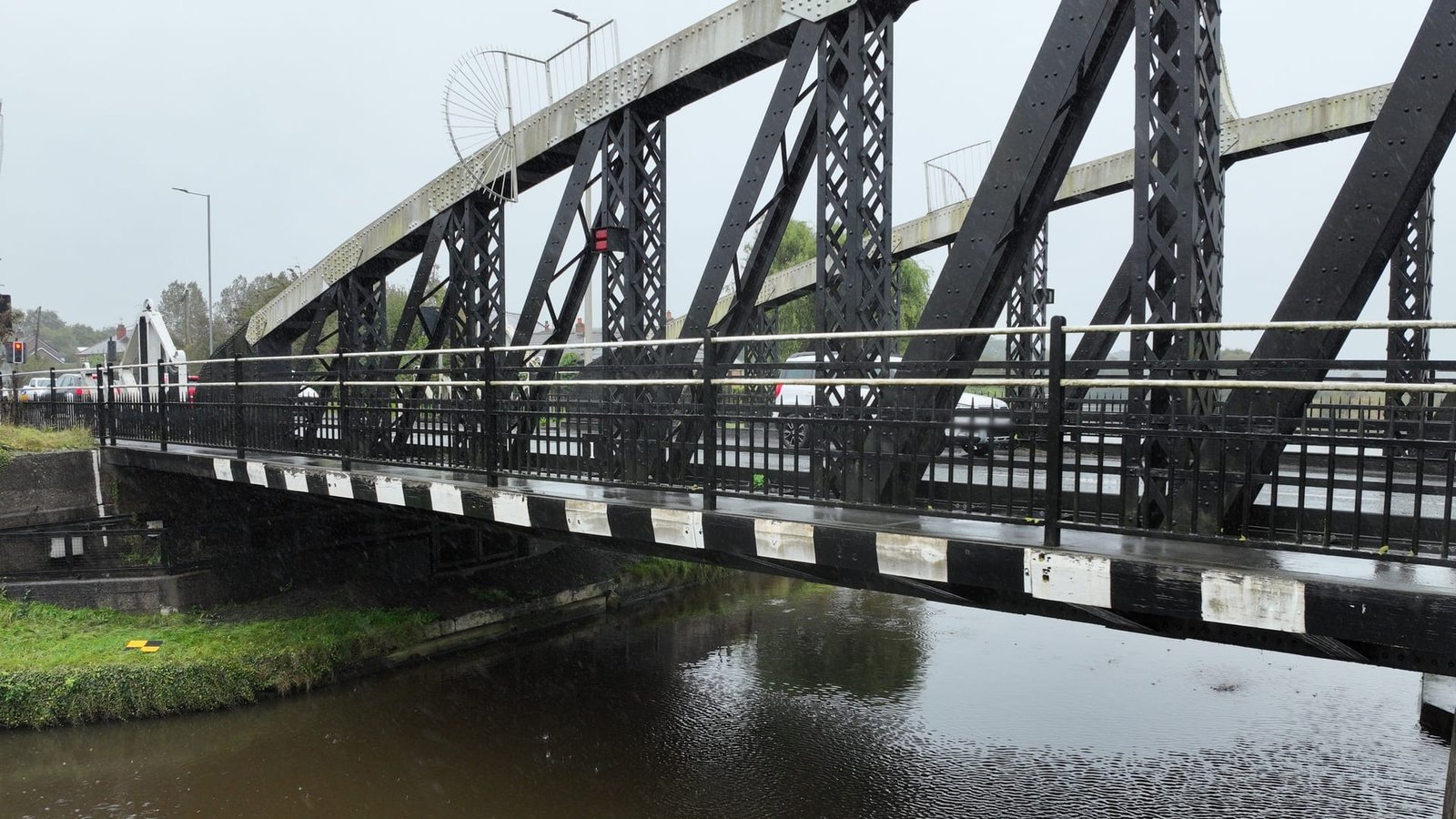
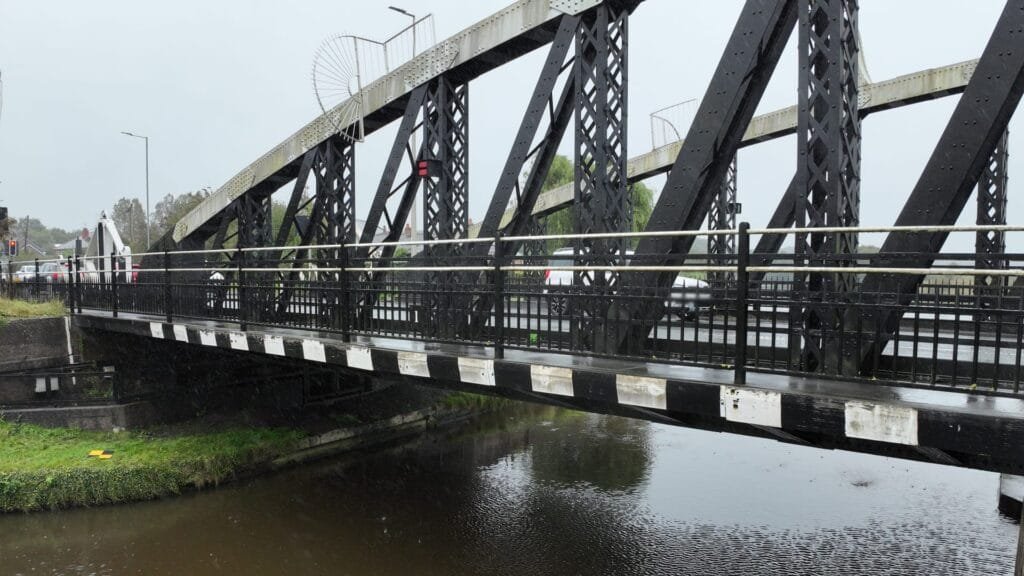
Swing bridges are the core of our moving structures work: road bridges and footbridges, operated by hand or by hydraulic and electric drives. Most refurbishments start with the mechanism, but the steelwork is almost always changed by them.
We assess the deck, pivot and abutments with the measured section loss built in, in both the open and closed positions. Where a new drive needs a hatch through the deck, we frame trimming beams around it so the main beams need no strengthening. Corrosion at the nose, tail and pintle is repaired with welded patch plates, and kentledge containment is redesigned to drain freely.
Around the bridge, we design the access control that keeps it safe to operate: rising-arm barriers, wig-wag signals, ducting and control cubicle bases, each set out clear of the swing.
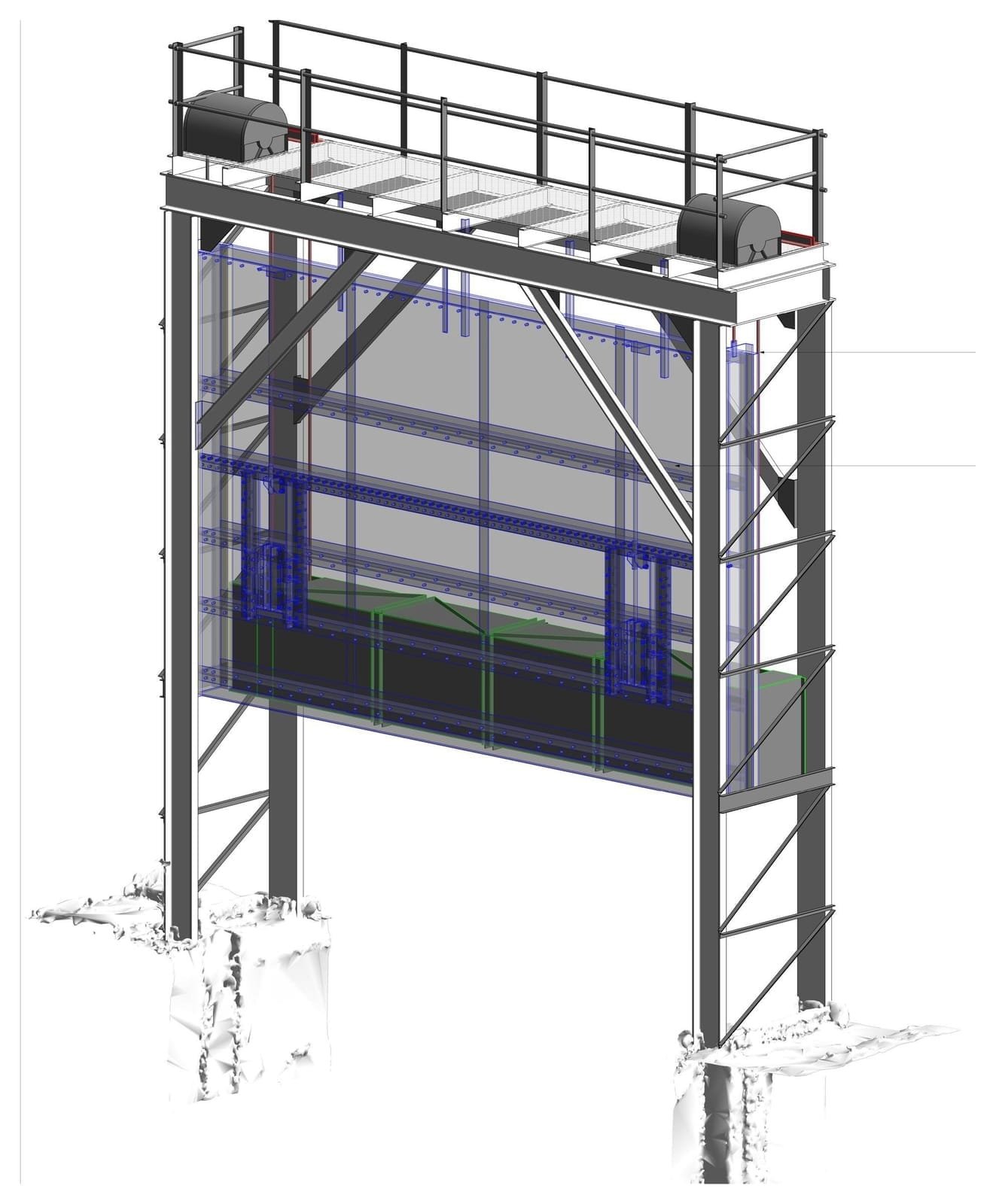
The same approach works on every structure that moves. Whether it is a lifting bridge being re-equipped, a lock gate due for maintenance or a guillotine gate that has to be lifted off its gear, we start from a measured model and design the permanent and temporary works against it.
Bascule bridges hinge at one end and tip upwards, balanced by a counterweight; vertical lift bridges raise the whole deck. We laser scan and model them inside and out, so the M&E designer can detail new equipment around the lifting struts and main pivots from measured geometry.
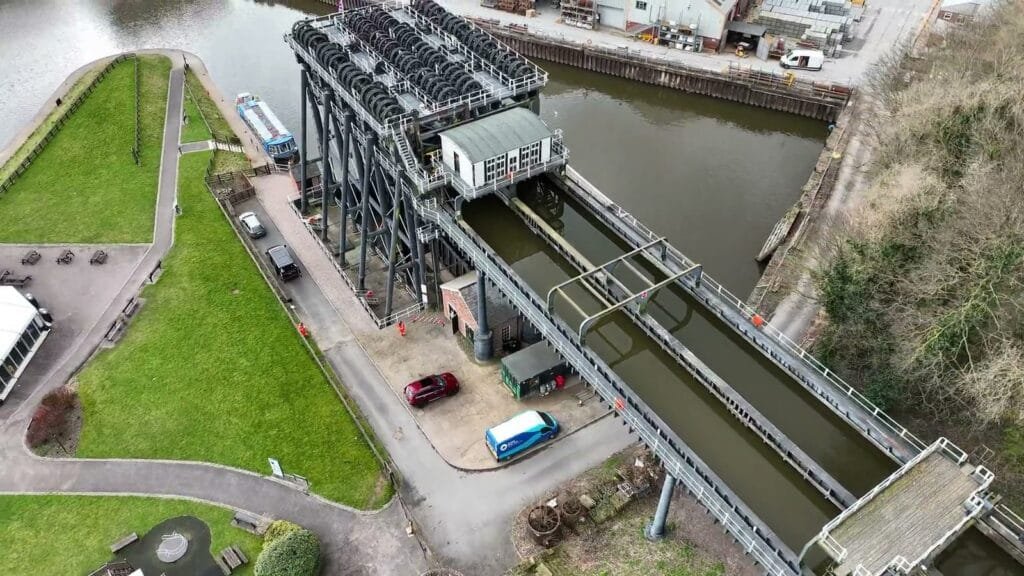
Boat lifts carry vessels between water levels in caissons, and each one is effectively unique. We combine terrestrial laser scanning with RTK drone photogrammetry to capture them without scaffolding, build a full digital twin and design the civils around them.
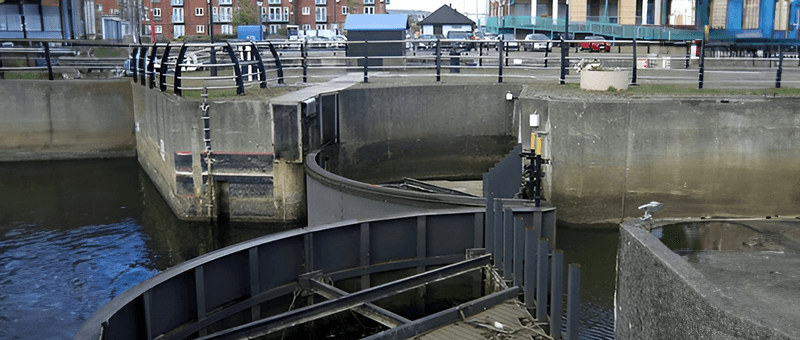
Lock gates work in the wettest part of the structure. We assess gates and their supports, and design the temporary works needed to support or lift a gate while bearings, pivots or seals are replaced.
Guillotine gates rise in a lifting frame, usually counterbalanced. We model the gate and frame from point cloud data and compare temporary works options for lifting them, from counterweights on strops and chain blocks to lifting beams on clamped connections.
Paddles, penstocks and sluice gates that control levels and flows. Often small and often safety-critical, they get the same survey-first approach.
For new swing bridges we provide the analysis, foundation and steelwork design, including technical approval (AIP) and design certification.
We flew a drone survey and built a Revit digital twin of the bridge, banks and approaches, then designed new 4.5 m rising-arm barriers, wig-wag signals, twin 65 mm ducts with turning chambers, fencing and a replacement control cubicle base, each with its own foundation. The works are built, and our as-built drawings feed the asset owner's O&M manual. The same client has since asked us to survey a second swing bridge, open and closed.
With the slewing mechanism being reconfigured, we carried out a point cloud survey and inspection, including the pintle abutment, and assessed the deck for a 10 tonne live load limit. Trimming beams around a new drive access hatch meant the main beams needed no strengthening. Corrosion repairs used welded patch plates, and the kentledge containment was redesigned to drain freely. We issued drawings, calculations and an AIP.
A multi-stage commission covering temporary works for wedge replacement, a 3D model of the bridge and its M&E equipment, drawings of the basement motor room and a structural assessment with reaction force analysis. We also designed a wedge block towing arm, control room supports, barrier plinths, wig-wag signal foundations, buffer stop fixings and the site ducting layout.
We laser scanned and drone surveyed the bridge inside and out, then converted the data into a Revit model at LOD 300. The M&E designer used it to detail new equipment around the lifting struts and main pivots, working from measured geometry rather than old drawings.
We combined terrestrial laser scanning with RTK drone photogrammetry to capture a historic boat lift without scaffolding, merged the data into a full Revit digital twin for the lift's M&E specialist, and designed the civils for relocating the M&E kiosk.
We built a 3D model of a guillotine gate and its lifting frame from point cloud data, and used it to develop and compare temporary works options for lifting the gate during maintenance.
Common questions about our moving structures work. If you need more detail, get in touch and we’ll be happy to discuss your project.
A swing bridge rotates horizontally about a pivot, usually a central pintle or a slewing ring running on rollers, to open a clear channel for boats. Kentledge in the tail balances the deck about the pivot so it can turn. When the bridge closes, wedges or end lifting gear seat the nose and tail on their bearings so the deck carries traffic like a fixed span. Because the deck is supported differently open and closed, we assess it in both positions.
A swing bridge turns horizontally about a pivot. A vertical lift bridge raises its whole deck straight up between towers or frames. A bascule bridge hinges at one end and tips its deck upwards, usually balanced by a counterweight, and many canal lift bridges work this way. Each type loads its structure and mechanism differently, so each needs its own assessment approach.
Yes. Drone and laser scan survey is fast and non-intrusive. Where we need the bridge captured open and closed, we plan the swing with the operator so it fits normal operation or a planned closure.
We are structural and civil engineers. We design the structure, foundations and supports, and coordinate closely with the mechanical, electrical and hydraulic specialists who design the drive and controls.
Yes, but on older moving bridges the drawings rarely match what is there. We recommend a measured survey first, and in most cases it saves time later.
Yes. We design temporary works to support or lift gates, counterweights and decks while bearings, wedges, chains or drive components are replaced, working from a measured model so the temporary works fit first time. See our temporary works design service.
Construction drawings, calculations and, when the works are complete, as-built drawings and the 3D model for the asset owner’s records.
Please fill in the form and we will get back to you as soon as possible to discuss your new project.