• About
  • Services
  • Sectors
  • Our Clients
  • Blogs
  • Contact

Substation Design

Bringing together civil, structural, electrical, and environmental engineering to deliver comprehensive substation design services across the UK.

Substation Design Services

Matrix Consulting Engineers provides end-to-end substation design services for projects ranging from 11kV distribution substations through to 132kV grid substations. Our multi-disciplinary team brings together civil, structural, electrical, and geotechnical expertise under one roof — reducing interface risk and delivering fully coordinated design packages.

We work directly with Distribution Network Operators (DNOs), Independent Distribution Network Operators (IDNOs), EPC contractors, and private developers. Whether the project is a new-build primary substation, a grid connection for a renewable energy scheme, or a compact indoor substation within a commercial development, our approach is the same: technically rigorous, buildable, and delivered on programme.

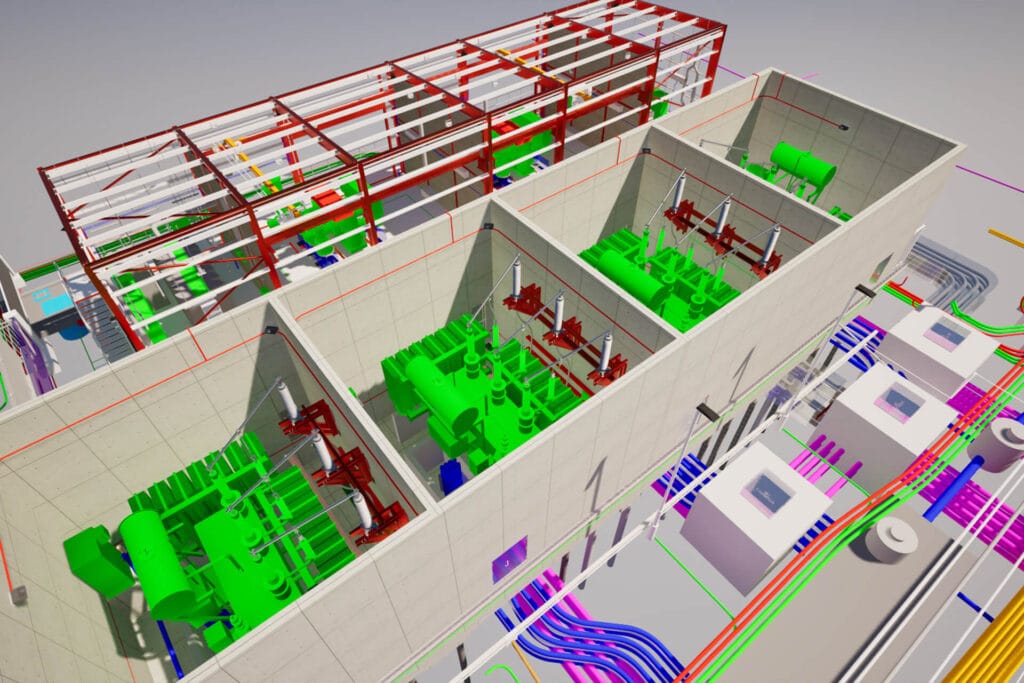
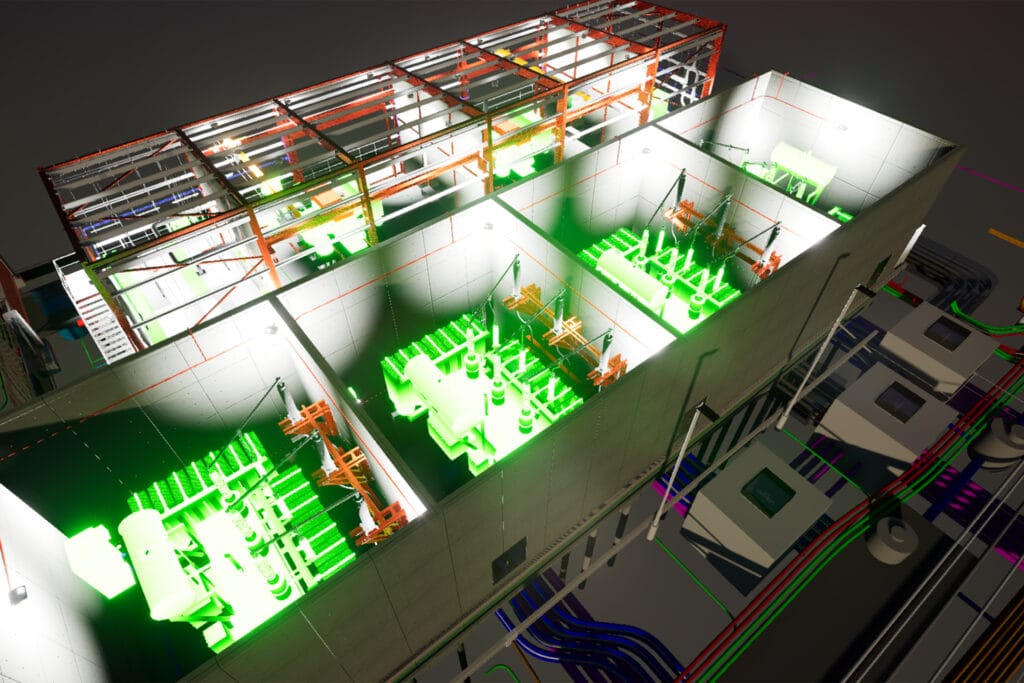
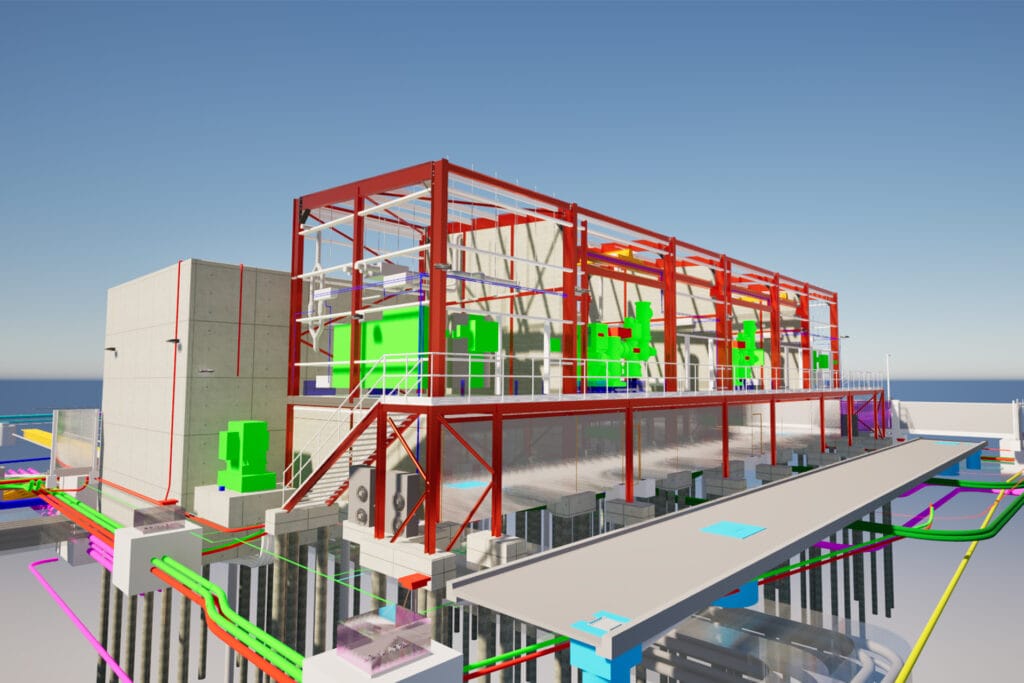
3D rendering of a building with exposed structural elements showcases three rooms housing green industrial machinery, with visible pipework and wiring—a visual highlight for structural and civil engineering projects.
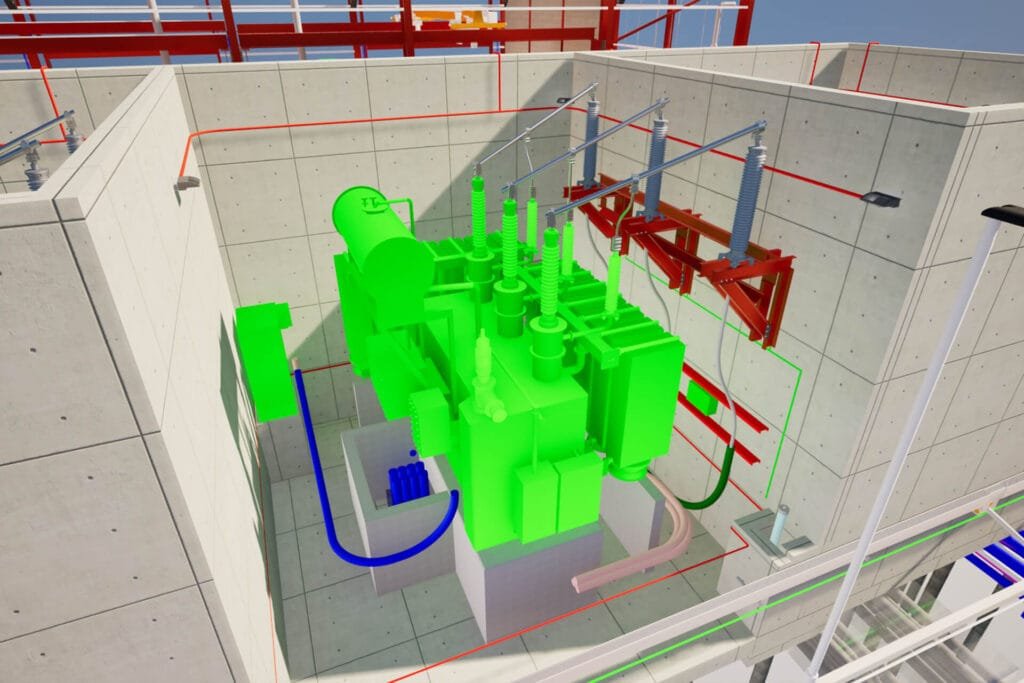
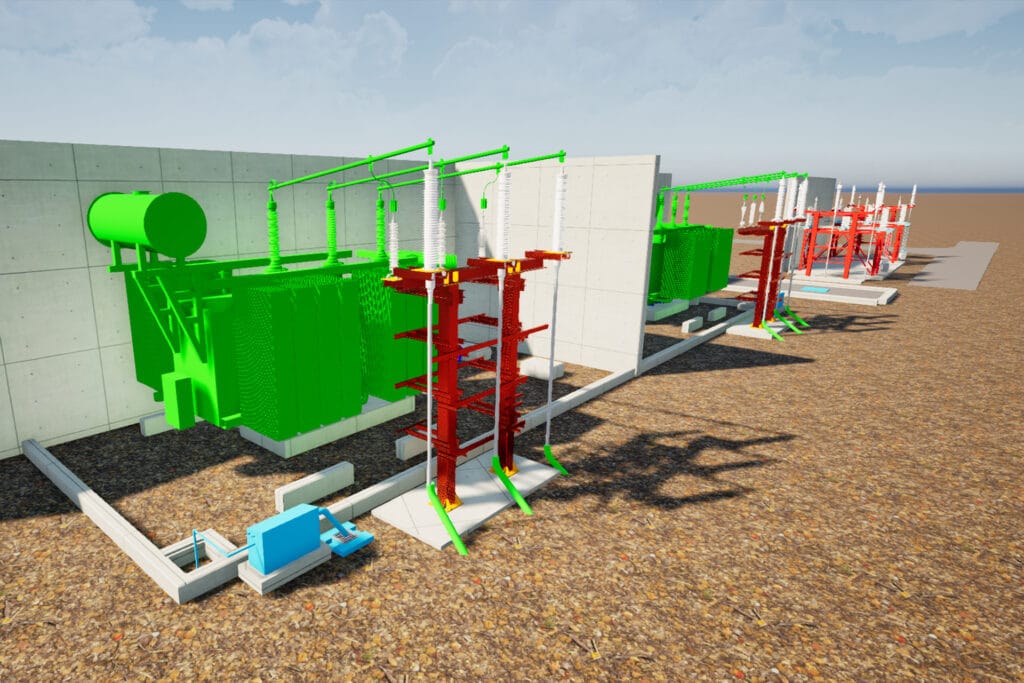
3D model of an electrical substation highlighting civil engineering elements like concrete walls, a green transformer, overhead busbars, red structural supports, and visible wiring and pipework, ideal for surveying and design reference.

Precision in Electrical Substation Design

Our approach is methodical and coordinated across all disciplines. We begin with a thorough feasibility study to understand grid connection requirements, site constraints, and programme drivers, feeding into conceptual design where we establish the optimum layout, voltage levels, and equipment specification.

Detailed engineering follows with full production of civil, structural, and electrical drawings, specifications, and calculations. We manage the interface with DNOs and statutory bodies to support regulatory approvals and keep the programme on track. Throughout procurement and construction, our team provides technical support including design queries, site inspections, and construction-stage BIM coordination.

0
MW
CAPACITY PRODUCED
0
KV
TOTAL VOLATAGE
0
‎ ‎ ‎ ‎
DATA CENTERS
0
SUBSTATIONS

Why choose Matrix Consulting Engineers?

We eliminate coordination gaps between separate companies, giving you a single point of responsibility for the entire substation design package.

Structural Engineering

Foundations, steelwork, switch rooms, and gantry structures designed for long-term operational loads.

Civil Engineering

Drainage, earthworks, access roads, cable trenches, and site compound layout from concept to detail.

Surveying

Topographical, drone, and point cloud surveys providing precise existing conditions data from day one.

BIM Coordination

ISO 19650 certified 3D modelling for clash detection and multi-discipline spatial coordination.

Electrical Engineering

Primary and secondary systems design coordinated with the civil and structural package.

Architectural Design

Ground investigation interpretation and foundation recommendations tailored to site conditions.

Choose Matrix Consulting Engineers for your substation design needs and experience the difference that expertise, innovation, and dedication to excellence can make. Let us help you create structures that are not only functional and durable but also a testament to superior engineering and design.

Expertise and Innovation

With deep expertise and a passion for innovation, we stay ahead of industry trends, bringing the latest technologies and methodologies to every project.

Collaborative Approach

We believe in a collaborative, non-confrontational approach, working closely with clients and other professionals to generate creative solutions and establish long-term, productive relationships.

Sustainable Solutions

Our designs prioritise sustainability, ensuring that your timber structures are environmentally friendly and resource-efficient without compromising on quality or performance.

Client
Satisfaction

Client satisfaction is our top priority. We strive to exceed expectations by delivering projects that are safe and economic ensuring you are always our first choice for consulting services.

Commitment to Excellence and Compliance

Matrix Consulting Engineers is dedicated to maintaining the highest standards in all our projects. Our substation design services comply with all relevant national and international codes.
Our commitment to these standards ensures that our designs are not only safe and sustainable but also meet all legal and regulatory requirements, providing you with peace of mind and a solid foundation for your construction project.

Data Centre Substations

Data centres, the backbone of our digital infrastructure, require a reliable and uninterrupted power supply to ensure the continuous operation of servers, storage systems, and networking equipment. To achieve this, data centres are typically powered by electrical substations, which play a crucial role in transforming and distributing electricity to meet the specific needs of these facilities. Here’s a detailed explanation of how this process works:

For data centres, a dedicated substation, often located on-site or nearby, steps down the voltage from the secondary substation to the specific levels required by the data centre’s infrastructure. This is achieved using additional transformers.

Once the electricity reaches the data centre substation at the appropriate voltage, it is distributed within the facility through a complex network of switchgear, circuit breakers, and distribution panels. This internal distribution network ensures that power is delivered to all critical components, such as servers, cooling systems, networking equipment, and lighting.

Data Centre Substation Design
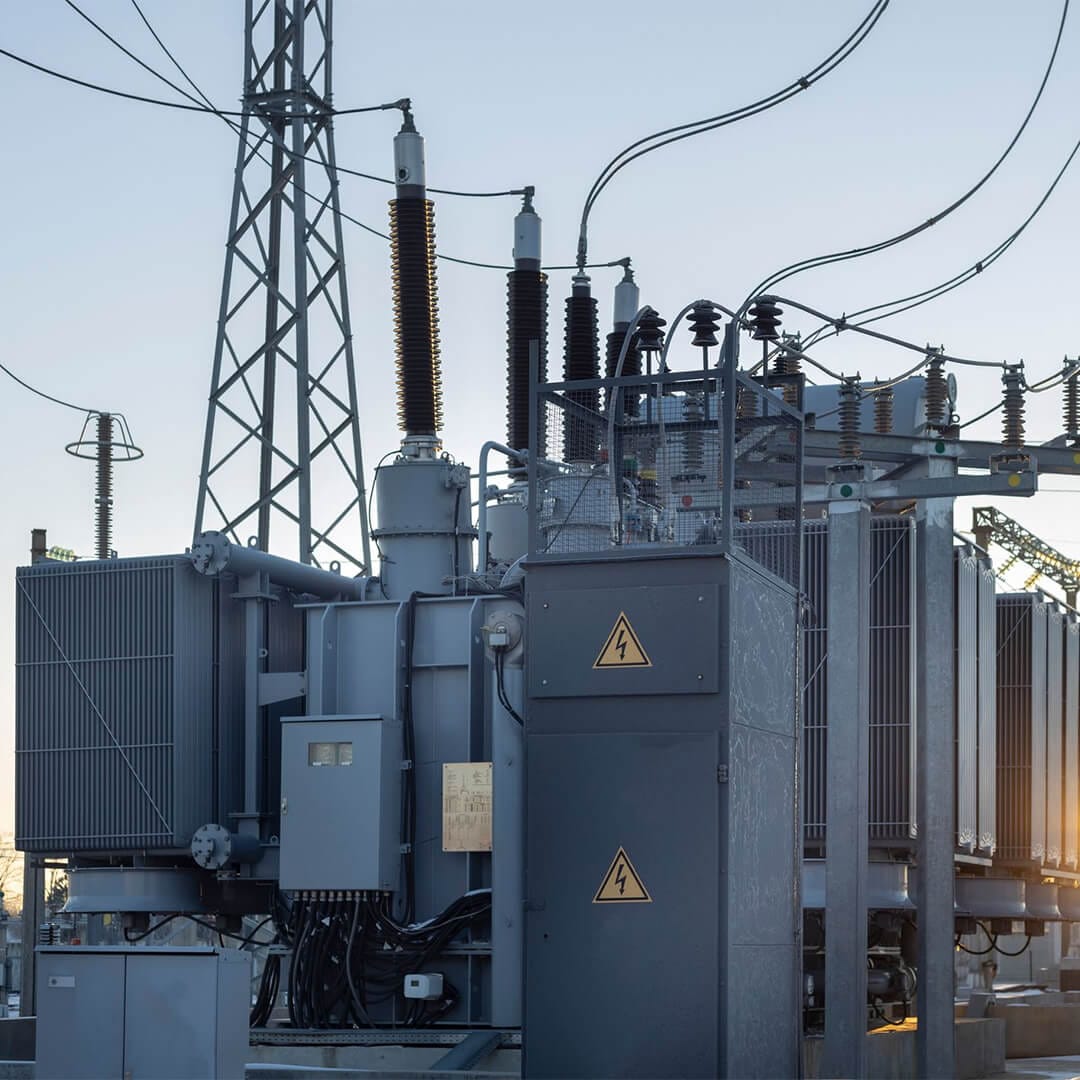
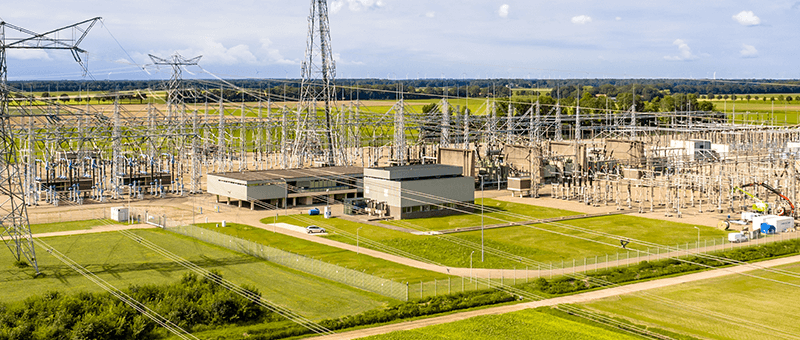
Outdoor electrical substation with transformers, power lines, and warning signs indicating high voltage.

Primary Substations

The first step in distributing electricity to data centres involves primary substations. These facilities step down the high-voltage electricity from the transmission lines to a lower voltage (commonly between 33 kV and 132 kV) using large transformers. The primary substation acts as a bridge between the transmission network and the distribution network.

Electrical substations are a crucial component of the UK’s electrical grid, facilitating the transformation and distribution of electricity from power generation sites to end users. They are strategically located across the country to ensure the efficient and reliable delivery of power. Here’s a detailed overview of where electrical substations are primarily used in the UK:
1. Urban Areas

London, Manchester, Birmingham, Glasgow, and Other Major Cities:

  • High Demand: Urban areas have a high concentration of residential, commercial, and industrial consumers, leading to significant electricity demand.
  • Distribution Hubs: Substations in cities often function as major distribution hubs, stepping down high-voltage electricity from transmission lines to lower voltages suitable for local use.
  • Infrastructure Integration: These substations are integrated into the urban infrastructure, often housed in purpose-built buildings or underground facilities to save space and reduce visual impact.
2. Industrial Zones

Merseyside, West Midlands, South Wales, Teesside:

  • Heavy Industry: Areas with heavy industrial activity, such as manufacturing plants, steel mills, and chemical factories, require substations to supply the substantial power needs of these operations.
  • Specialised Substations: Industrial zones often have dedicated substations designed to handle large power loads and provide stable, high-quality power to sensitive equipment.
3. Rural Areas

Scottish Highlands, Wales, South West England, East Anglia:

  • Agricultural and Remote Communities: Substations in rural areas ensure that farms, remote communities, and small towns have access to reliable electricity.
  • Renewable Energy Integration: Many rural substations are connected to renewable energy sources, such as wind farms and solar arrays, which are often located in less densely populated areas.
4. Coastal Areas

East Coast, South Coast, North Sea Oil Rigs:

  • Offshore Wind Farms: Substations are essential for integrating electricity generated by offshore wind farms into the national grid.
  • Marine Industry: Coastal substations support the power needs of ports, shipyards, and other marine-related industries.
5. Power Generation Sites

Drax Power Station (Yorkshire), Hinkley Point (Somerset), Sizewell (Suffolk):

  • Proximity to Power Plants: Substations located near power generation facilities (nuclear, coal, gas, hydro, wind, and solar) step up the voltage of electricity produced to levels suitable for long-distance transmission.
  • Grid Stability: These substations play a crucial role in maintaining grid stability and efficiency.
6. Transmission Network Intersections

National Grid Nodes:

  • Grid Interconnection: Substations at key points in the transmission network, such as those at the intersections of major transmission lines, facilitate the transfer of electricity across regions.
  • Balancing Supply and Demand: They help balance supply and demand, ensuring that electricity is efficiently routed to where it is needed most.
7. Residential Areas

Suburban Communities Nationwide:

  • Local Distribution: Smaller substations within residential areas step down electricity to the low voltages required for homes.
  • Safety and Reliability: These substations are designed to be safe and reliable, minimising outages and ensuring consistent power supply to households.

Energy storage & renewables

Battery Storage (BESS)

The UK's transition to net zero is driving rapid growth in grid-scale battery energy storage. We provide civil and structural design for BESS substation compounds — transformer and switchgear foundations, battery container plinths, cable trench networks, access roads for abnormal loads, and surface water drainage with oil containment. BESS sites present specific challenges including thermal management spacing, NFCC fire separation distances, and phased construction sequencing.

Renewable Energy

Solar farms, onshore wind, and hybrid schemes all require substation infrastructure to export power to the grid. We deliver foundations, drainage, earthworks, access roads, and structural designs for switchrooms and gantry steelwork. Where sites are subject to flood risk, we design critical platforms above predicted flood levels and incorporate EA and LLFA flood resilience measures.

3D rendering of electrical transformers and switchgear equipment installed outdoors by civil engineers, separated by concrete barriers, on a gravel surface under a partly cloudy sky.
Digital 3D model of an industrial facility designed for civil engineers, showing rooms with highlighted green machinery and overhead structural frameworks.
A digital 3D rendering of an industrial building under construction, featuring a structural steel frame, concrete walls, and colour-coded mechanical components—essential tools for engineers and surveying teams.

Frequently asked questions

Common questions about our substation design services. If you need more detail, get in touch and we’ll be happy to discuss your project.

Substation design is a multi-disciplinary activity involving civil engineering (drainage, earthworks, access roads), structural engineering (foundations, bunds, buildings, steelwork), electrical engineering (primary and secondary systems), and geotechnical engineering (ground investigation and foundation recommendations). At Matrix, we bring these disciplines together under one roof to deliver fully coordinated design packages.


We provide civil and structural design services for substations from 11kV distribution substations through to 132kV grid substations. This covers secondary substations, primary substations, grid substations, and specialist substations for BESS, data centres, and renewable energy connections.

Yes. We work with Distribution Network Operators and Independent Distribution Network Operators across the UK, as well as EPC contractors and private developers delivering substation projects for grid connections.

Yes. We design substation infrastructure for battery energy storage systems, solar farms, and wind farm connections. This includes transformer compounds, battery container plinths, cable networks, and grid connection infrastructure.

We provide the full civil and structural design for data centre substation infrastructure, including transformer foundations and oil containment bunds, HV and LV switchroom structures, cable basement and riser designs, standby generator compounds, segregated cable trench networks, access roads for abnormal loads, and surface water drainage. We design for N+1 and 2N redundancy configurations and use BIM-coordinated workflows to manage the tight spatial coordination these projects demand.

Yes. We are ISO 19650 certified and deliver substation designs using BIM-coordinated workflows. Our 3D models integrate civil, structural, and electrical elements, enabling clash detection and more efficient construction sequencing.

READY TO START YOUR NEW PROJECT?

Please fill in the form and we will get back to you as soon as possible to discuss your new project.

Contact Form