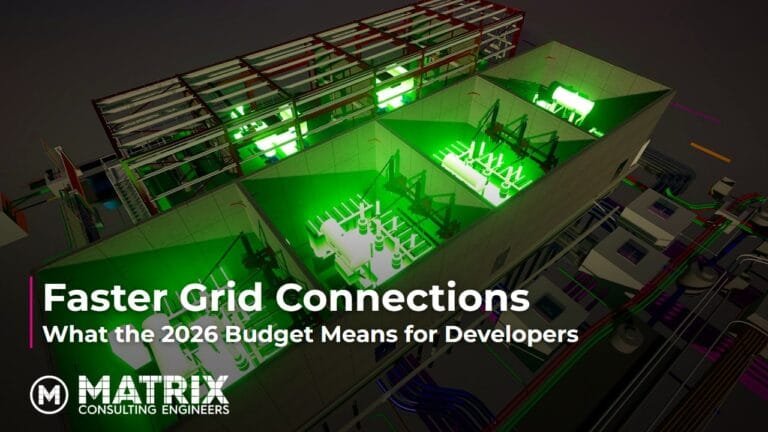


Grid connections have become one of the biggest factors in when new infrastructure gets built. The 2026 Budget, delivered on 28th October, landed in the middle of the largest overhaul of the connections system in years, and faster connections are firmly on the government’s agenda. For anyone developing data centres, battery storage, solar or new industrial sites, that’s welcome news. But a faster connection offer is only half the story. The other half is having a substation designed, approved and ready to build when your connection date arrives.
What the Budget Announced
The Budget confirmed several measures that bear directly on grid connections and the infrastructure behind them:
- Priority connections for strategic projects. The government will use its powers under the Planning and Infrastructure Act to prioritise grid connections for strategically important projects, moving them up the queue. For developers, that means a connection date could arrive sooner than planned, so the substation design needs to be ready earlier.
- More competition to build the grid. Great British Grid will work alongside existing network operators to speed up grid upgrades, and competition will shortly be introduced into onshore electricity transmission. More organisations will be designing and building new network and connection assets, not just the traditional network companies.
- A new deal for data centres. A Data Centre Covenant sets the tests strategic data centres are expected to meet, including paying their fair share of energy costs and supporting grid resilience. Alongside it, the government will reserve and reallocate connections for strategic demand, identify where capacity may be available before 2030, allow pre-2030 data centre connection contracts to be transferred and, for exceptionally strategic projects, enable temporary power while they wait for a connection. Substation compounds and temporary generation could need designing at short notice.
- New generation only where the grid can take it. New clean power will only be procured where it lowers bills, benefits the system and can be accommodated by the grid. A credible, well-designed connection is now part of the case for a project, not an afterthought.
The Chancellor was clear that reform of the energy system won’t happen overnight, but the direction is set: strategic projects that are ready to build will be first in line. You can read the full Budget 2026 document on GOV.UK.
Where Grid Connection Reform Stands
Grid connections have been one of the biggest brakes on new infrastructure in Britain. Much of the queue was speculative, so viable projects waited behind schemes that might never be built. The reforms of the past year have started to change that.
- The queue has been reset. Connection reform has removed more than 300GW of speculative capacity from the queue. By June 2026, NESO had issued new connection offers to more than 700 projects, totalling around 37GW.
- Demand projects are being prioritised. Requests to connect large energy users, such as data centres, rose from 41GW in November 2024 to 125GW by June 2025. The government is working to prioritise strategically important demand projects, including AI Growth Zones.
- A new publicly owned grid company. In September 2026, the government announced the Great British Grid, a public body within Great British Energy that will compete to deliver new transmission infrastructure.
- More self-build. The government plans to expand self-build connections, so developers can build their own connection assets rather than wait for network companies. Ofgem consulted on the proposals in autumn 2026, and the government points to Ireland, where similar reforms have cut connection times by up to 11 months.
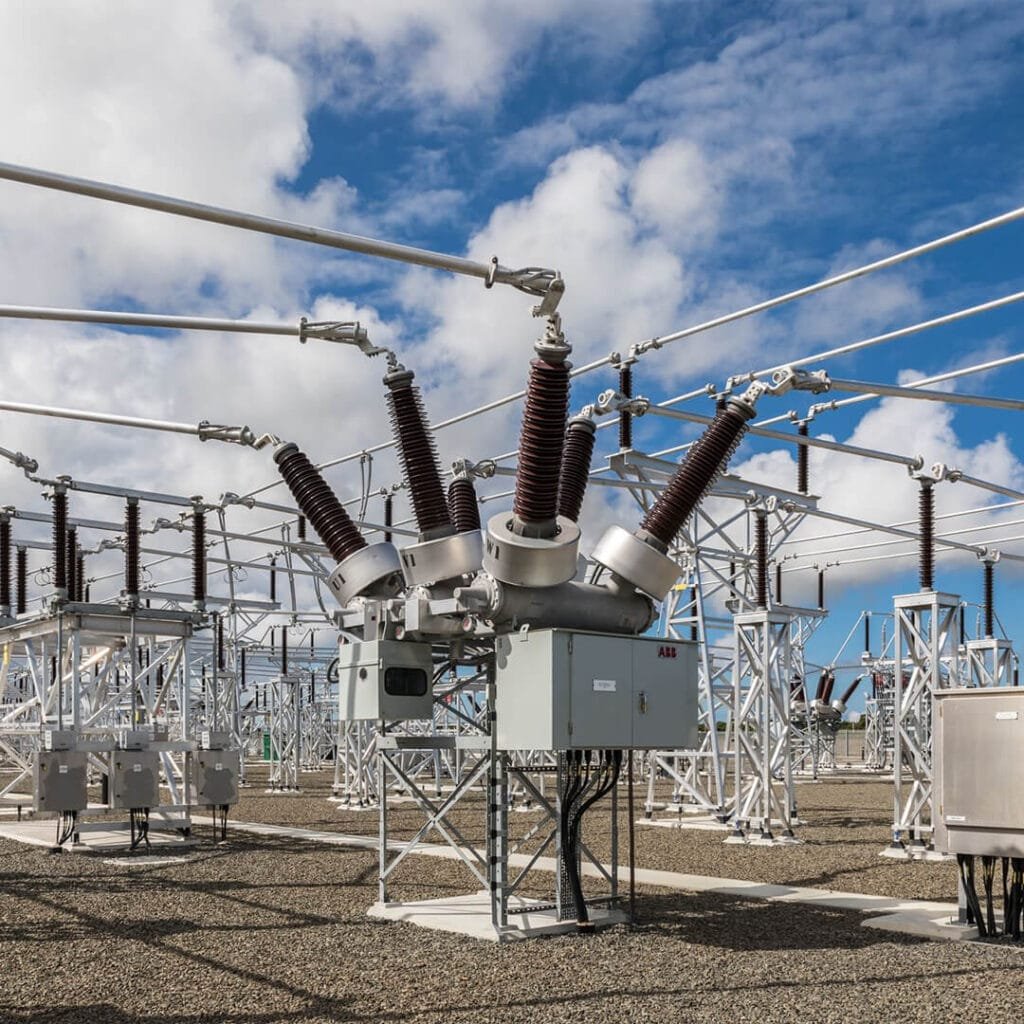
Together, these changes move the bottleneck. When a connection date comes forward, or a developer takes on the build themselves, the critical path shifts to the developer’s own site: the substation compound, its foundations, its drainage and its access.
A Connection Date Doesn't Build a Substation
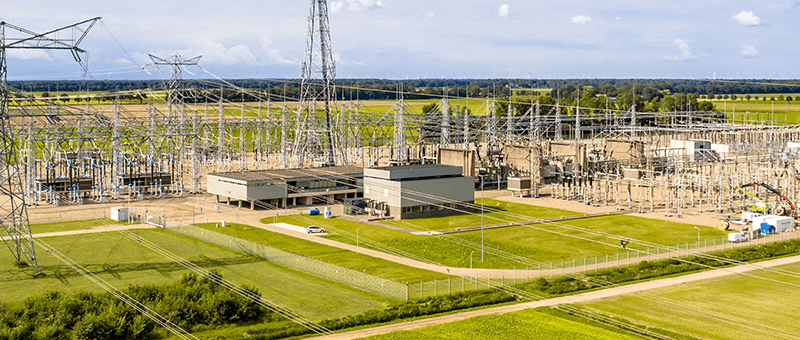
A grid connection offer gives you a date. It doesn’t give you a substation. Before energisation, someone has to design and build the infrastructure that the electrical equipment sits on and in.
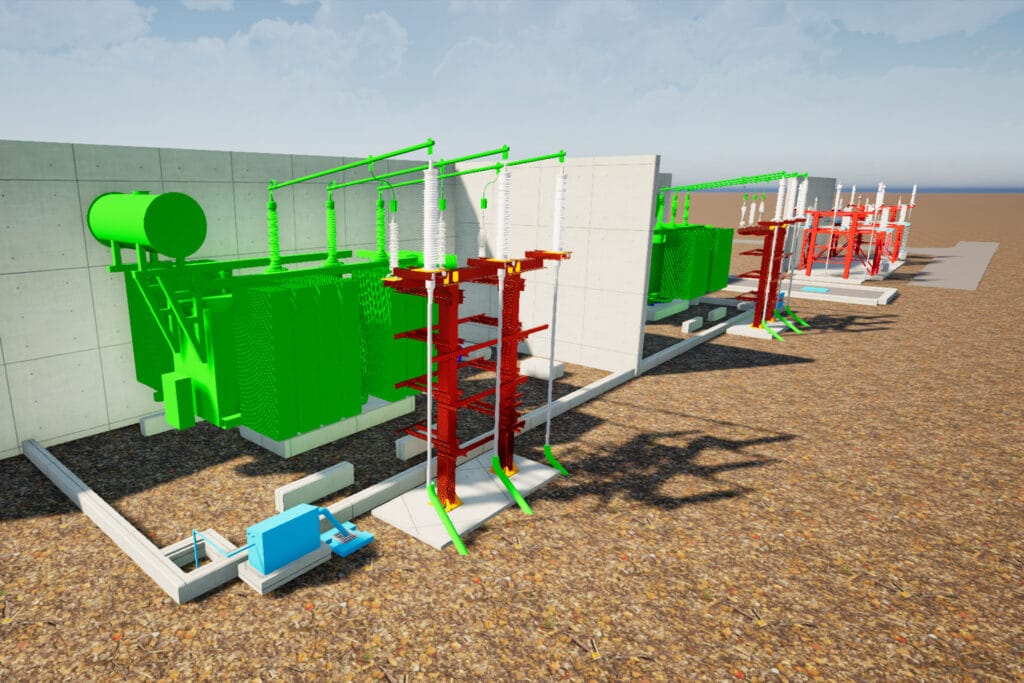
- Transformer foundations and oil containment bunds, sized for the equipment and the ground conditions.
- Switch rooms and buildings, with their own foundations and structure.
- Gantries and equipment supports, designed for long-term operational loads.
- Cable trenches and duct routes, coordinated with everything else on site.
- Drainage, earthworks and access roads, including surface water with oil separation.
- Flood resilience, where the site sits in a flood zone or near a watercourse.
None of this can wait until the connection offer lands. If civil and structural design starts late, a site can have a confirmed connection date and still miss it. And if the design doesn’t meet the network operator’s standards first time, the redesign eats into the programme too.
Self-Build Changes Who Carries the Design Risk
Self-build connections are good news for developers who want control of their programme, but they come with responsibility. When you build connection assets that a network operator will later adopt, the design has to meet that operator’s standards from the start. Anything that falls short at adoption costs time.
That’s where early, experienced substation design pays for itself. A design team that works with network operators’ requirements every day can:
- Design to the adopting operator's standards first time, rather than redesigning after review.
- Resolve conflicting requirements early. Flood protection is a common example, and we've written about navigating conflicting DNO flood standards.
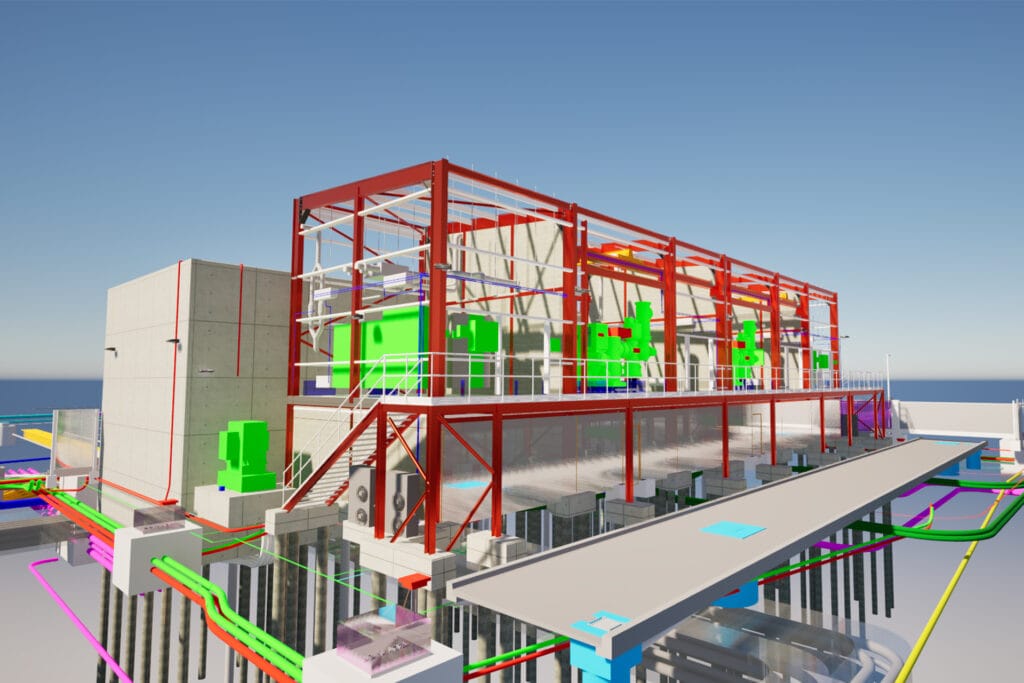
- Coordinate civil, structural and electrical packages in one model, so clashes are found on screen and not on site.
- Phase design packages, so groundworks can start while later elements are still being finalised.
Six Things Developers Can Do Now
- Survey the site early. Drone LiDAR, photogrammetry and topographical surveys give the design team accurate ground levels, existing features and constraints from day one.
- Get ground investigation under way. Foundation design for transformers and switch rooms depends on it, and poor ground found late is one of the most common causes of delay.
- Settle the flood and drainage strategy. Surface water, oil containment and flood resilience often shape the whole compound layout.
- Design to the network operator’s standards from the start, especially if you’re self-building assets that will be adopted.
- Coordinate in BIM. A federated 3D model of the civil, structural and electrical design catches clashes before construction.
- Plan for phasing. On larger campuses, phased packages let early works start sooner.
How Matrix Can Help
We provide civil and structural substation design from 11kV distribution substations to 132kV grid substations, for network operators, EPC contractors and private developers. Our work covers data centres, battery storage and renewables, from feasibility and conceptual design through detailed design, network operator liaison and construction support.
At Colt Data Centre Services’ Hayes campus in West London, we led the civil and structural substation design on London 4, including a 66kV substation, transformer bunds, foundations, switch houses, drainage and access roads, all coordinated in clash-free 3D models. Read the Colt Hayes case study.
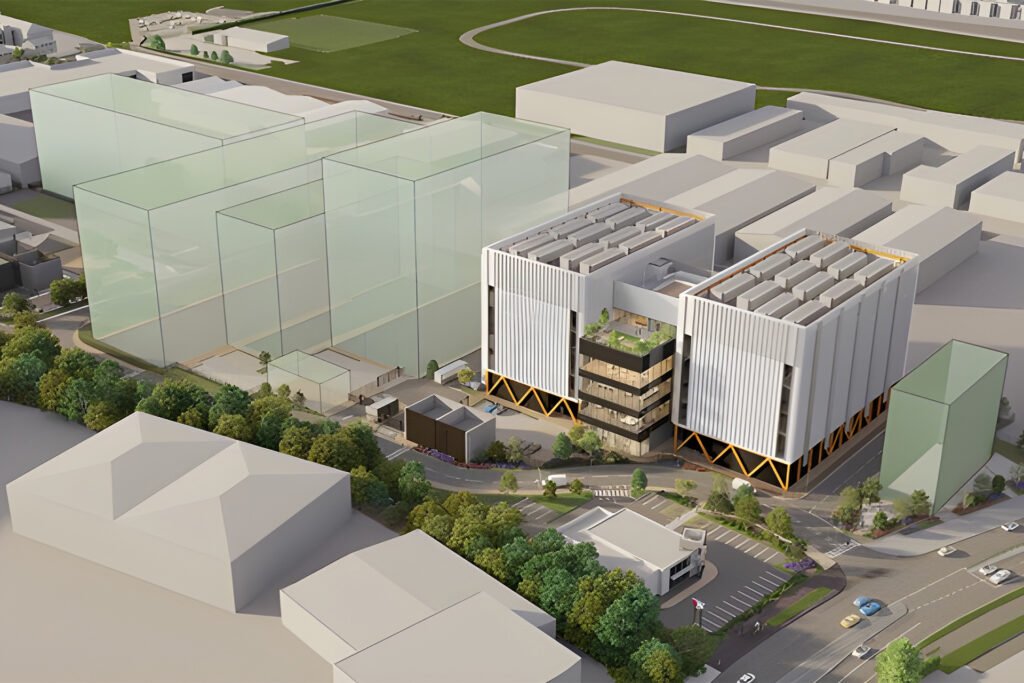
In-house drone and LiDAR surveys from our sister company, Matrix Advanced Surveying, mean design starts from accurate site data, and our ISO 19650-certified BIM processes keep every discipline working from the same model.
Common Questions
What is a self-build grid connection?
It’s where the developer or business connecting to the grid designs and builds some or all of the connection assets themselves, rather than waiting for the network company to do it. Once built to the right standards, the assets can be adopted by the network operator.
When should substation design start?
As early as possible, ideally alongside the connection application. Survey, ground investigation, drainage and flood strategy all feed the design, and none of them can be rushed once a connection date is fixed.
Which substations do you design?
We provide civil and structural design for substations from 11kV distribution to 132kV grid substations, for data centres, battery storage, renewables and network operators.
Got a grid connection date coming up?
Make sure your substation is ready for it. See our substation design service, or talk to our substation design team about your project.